Перейти к содержимому
MolotorenkoK

Ксения Молоторенко

@MolotorenkoK

На сайте с 27 января 2014 г.Казахстан, Павлодар

Пользователь пока ничего не рассказал о себе.

рейтинг

100

постов

10

комменты

34

подписчиков

7

подписок

8

Graphical EM-s

Hey, girls! This time I decided not to repeat and do not write about all these graphical EM-s as italics, capitalization, graphon, hyphenation and multiplication.

I suggest you to take a test! ;)

1) Define one of the expressive means on this picture

2) Define one of the expressive means

Show the physical defects of the speaker (lisping, stumbling, etc)

"You don't mean to thay that thith ith your firtht time."

3) This graphical expressive means used to produce the effect of emphasis
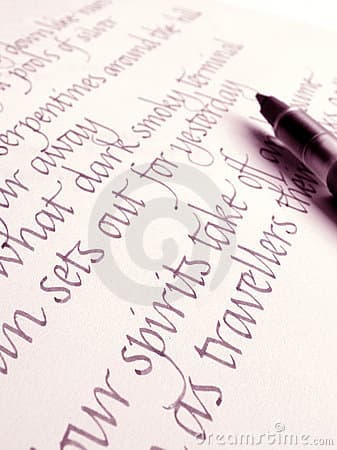
4) Define one of the expressive means

Adieu you, old man, I pity you, and I de-spise you.

5) The same letters written several times....


Good luck!!! :)

1
6
738

Phono-graphical EM-s

Phono-graphical EM-s in the story “The last leaf” by O.Henry


...she wanted to paint the Bay of Naples some day." said Sue. (Assonance)

Sue stopped whistling, thinking she was asleep.... (Assonance; Alliteration)

An old, old ivy vine, gnarled and decayed at the roots, climbed half way up the brick wall. (Assonance)

"Beside, I don't want you to keep looking at those silly ivy leaves." (Assonance)

"Tell me as soon as you have finished," said Johnsy, closing her eyes, and lying white ...(Assonance)

You may bring a me a little broth now, and some milk with a little port in it... (Assonance)

And then they found a lantern, still lighted, and a ladder that had been dragged from its place... (Alliteration)

They're falling faster now. (Alliteration)


1
2
373

syntactic SDs in the story “The last leaf” by O.Henry

The stylistic analysis of the text “The last leaf” by O.Henry. In a little district west of Washington Square the streets have run crazy and broken themselves into small strips called "places." These "places" make strange angles and curves. One Street crosses itself a time or two. An artist once discovered a valuable possibility in this street. Suppose a collector with a bill for paints, paper and canvas should, in traversing this route, suddenly meet himself coming back, without a cent having been paid on account! So, to quaint old Greenwich Village the art people soon came prowling, hunting for north windows and eighteenth-century gables and Dutch attics and low rents. Then they imported some pewter mugs and a chafing dish or two from Sixth Avenue, and became a "colony." At the top of a…

0
4
6042

Syntactical SD-s and EM-s

Another week, another new stylistic devices! This time such as climax, anticlimax, antithesis, attachment, asyndeton, polysyndeton, break-in-the-narrative, chiasmus, detachment, ellipsis, enumeration, litotes, parallel constructions, question-in-the-narrative, represented speech, rhetorical question, suspense, inversion, repetition. I will give a brief overview of some. Anticlimax or back gradation a figure of speech that consists of the usually sudden transition in discourse from a significant idea to a ludicrous one. Alexander Pope’s The Rape of the Lock uses anticlimax liberally; an example is Here thou, great Anna, whom three realms obey,Dost sometimes counsel take, and sometimes tea. Attachment the utterance is separated by a full stop from the first as if in the afterthought.The sec…

1
2
2077

Periphrasis, Euphemism, Hyperbole, Understatement

Let us remember what new stylistic devices we have learned this week. Namely, these are periphrasis, euphemism, hyperbole, understatement. Periphrasis - is a stylistic device that consists in the renaming of an object by a phrase that brings out some particular feature of it. Longer-phrase is used instead of a shorter one. Periphrasis are divided into: 1. Logical - based on inherent properties of a thing. instruments of destruction (pistols),the most pardonable of human weaknesses (love). 2. Figurative - based on imagery: metaphor, metonymy.e. g. To tie a knot - to get married; in disgrace of fortune - bad luck. There are traditional periphrases which are not stylistic devices, they are synonymic expressions:The giver of rings, the victor lord, the leader of hosts (king),the play of sword…

2
6
5512

Stylistic devices creating humorous effect

This week we have learned some new stylistic devices. They are used to create a comic effect in fiction. These are pun, zeugma, irony and malapropism. 1) Pun, quibble or paranomasia - is a play on words in which a humorous effect is produced by using a word that suggests two or more meanings or the use of two different words which are pronounced alike. Puns are constructions used in jokes and idioms whose usage and meaning are entirely local to a particular language and its culture. In everyday life, puns are intentionally or accidently used in jokes and witty remarks. Let us consider a few examples: A bicycle can't stand on its own because it is two-tired. Here pun is in the end of the sentence, "bicycle" actually has two tires and that's why it cannot stand, here "two-tired" sounds like…

1
4
10181

Get acquainted with a Metonymy

Metonymy – the substitution of one object by another on the basis of their common existence in reality. The word metonymy comes from the Greek language and it means something like “the other name". It basically means that you call one thing by another related thing. Unlike metaphor there is a real connection between the concepts used in metonymy. Let’s look at some examples: One famous example of metonymy is the saying "The pen is mightier than the sword" http://examples.yourdictionary.com/examples/examples-of-metonymy.html Here, pen represents words or writing and sword represents fighting. Meaning writing is more powerful than war. So we have two objects representing general ideas. We can define the structure of Metonymy like this A/B instead of AB. As with other literary devices, the p…

Let's discuss Simile

This week we started a new theme called Simile.Simile is another stylistic device, the imaginative comparison of two unlike objects, but they are belonging to different classes. For instance, "That guy is as nutty as a fruitcake”. Here a human being - “a guy” is compared to bakery goods - “fruitcake”, actually these two objects belong to different classes. Animate compared to inanimate object. Simile is direct comparison, which unlike metaphor consists of three objects: the tenor, the vehicle and the link word, such as like, as, as though, as like, such as, as… as and etc. In example given above "that guy" – is tenor, a "fruitcake" – is vehicle and as… as is link words. So, the structure of simile is A is like B. As well as a metaphor, simile divided semantically into: original and trite.…

2
2
4793

Talking about metaphors!

So, this week we studied metaphors and its subtypes. Now we know that metaphors can be original or trite, and simple/ prolonged/ mixed. I decided to examine my favorite quote, which is quite famous and I think everyone is familiar with it. And that's how it sounds: "All the world's a stage, And all the men and women merely Players They have their Exits and their Entrances"William Shakespeare Already heard it? Right? :) "All the world's a stage" is the most frequently quoted phrase from a comedy "As You Like It" by William Shakespeare. There's a comparison of the world to a stage and life to a play. This part of the image is a metaphor. According to this line life is like a play - we merely go through the stages of our life acting it out. We all have our own stage and exits and entrances l…

4
3
582

Good day to all of you!

Good day to all of you! I've never ever created a blog, so this is my first step and experience of using a blog... From now on we will be talking with you here about Stylistics. We know that Stylistics is the linguistic study of style in language. Stylistics is regarded as a language science which deals with the results of the act of communication. Also we already know that Stylistics according to Stephen Ullman is sister-science to linguistics. According to I. R. Galperin here are 2 basic objects of stylistics: stylistic devices and expressive means; functional styles. Hope by the end of the course I get to know a lot of useful and interesting things that could help me in understanding the nature of language and express my thoughts in interesting talks with different people. As well as I…

2
4
317