Перейти к содержимому
AsselAbsalyamova

AsselAbsalyamova

На сайте с 17 февраля 2012 г.

Пользователь пока ничего не рассказал о себе.

рейтинг

100

постов

8

комменты

0

подписчика

3

подписка

1

Assonance

Assonance is one of the more difficult techniques to master when writing poetry. Assonance occurs when vowels are repeated in words that are close to each other. There are three literary devices found in prose and poetry. These are: Consonance - repeating the final consonant sounds of words. Writers usually focus on the accented syllables or the more important words to use in this technique.Alliteration - repetition of the first sounds of words that are fairly close together. A common example of alliteration is the tongue twister.Assonance - repetition of vowel sounds to set the mood or add to the meaning of the word. Some common conditions that assonance constructions include... - The repetitive sound must be that of vowels (A, E, I, O, U).- The repetition must me quite systematic and is…

100 Words Examples of Onomatopoeia

Onomatopoeia is the use of words (such as hiss or murmur) that imitate the sounds associated with the objects or actions they refer to. All Onomatopoeia Words are Written in Italic 1 - Cock-a-doodle-do, crowed the rooster. 2 - The clock goes ticktock. 3 - The cow says moo all day long. 4 - With the click of a mouse I can open another window on my computer. 5 - The duck quacked at the bird. 6 - Zip up your pants. 7 - The birds like to tweet outside my window. 8 - Don't belch so loud. 9 - I was so cold my teeth were chattering. 10 - I heard the bees buzzing. 11 - Don't beep that horn again. 12 - Phew, that stinks. 13 - I love to sniff a good smelling flower 14 - The pig squealed. 15 - I love chrunchy potatoe chips. 16 - Drip, drip, drip, went the faucet all day long. 17 - Baa, baa whaled th…

0
0
489

Anaphora, framing repetition, chain repetition

Love is real, real is love,

Love is feeling, feeling love,

Love is wanting to be loved.

Love is touch, touch is love,

Love is reaching, reaching love,

Love is asking to be loved.

Love is you,

You and me,

love is knowing,

We can be.

Love is free, free is love,

Love is living, living love,

Love is needing to be loved.

Love, John Lennon


A - Anaphora

C - Chain repetition

F - Framing repetition

0
0
4244

Anadiplosis

Repeating the same word(s) at the end of a sentence or a clause and in the beginning of the following sentence or clause is known as anadiplosis. For example: “The general who became a slave; the slave who became a gladiator; the gladiator who defied an Emperor.” It’s a good way to give rhythm to your writing. The word anadiplosis comes from Greek anadiplōsis meaning “repetition” or “to double”. Examples of anadiplosis Example of anadiplosis in Richard II by William Shakespeare Act V Scene I “The love of wicked men converts to fear; That fear to hate, and hate turns one or both To worthy danger and deserved death.” Example of anadiplosis in Richard III by William Shakespeare Act V Scene III “My conscience hath a thousand several tongues, And every tongue brings in a several tale, And ever…

0
0
480

Hyperbole

Examples of Hyperboles

A hyperbole is an extreme exaggeration used to make a point. It is like the opposite of “understatement.” It is from a Greek word meaning “excess.”

Hyperboles can be found in literature and oral communication. They would not be used in nonfiction works, like medical journals or research papers; but, they are perfect for fictional works, especially to add color to a character or humor to the story.

Hyperboles are comparisons, like similes and metaphors, but are extravagant and even ridiculous.

  • “I’ve told you a million times"
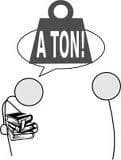
  • "I had a ton of homework"

  • "This car goes faster than the speed of light"
0
0
404

Stylistics

I would like to compare 2 classification of expressive means and stylistic devices. they are classification by I.R. Galperin and Y.M. Skrebnev. The classification suggested by Galperin is simply organized very detailed. His manual "Stylistics" published in 1971 includes following subdivision of expressive means and stylistic devices based on the level-oriented approach: 1) Phonetic expressive means and stylistic devices - onomatopoeia, alliteration, rhyme, rhythm; 2) Lexical expressive means and stylistic devices - metaphor, metonymy, polysemy, zeugma and pun, epithet, oxymoron, antonomasia, simile, periphrasis, euphemism, hyperbole, clichés, proverb and saying, quotation, allusion; 3) Syntactical expressive means and stylistic devices - inversion, detached constructions, parallel constru…

0
1
4550