


Metaphor Simile Personification Metonymy
|
Figure of speech |
Metaphor |
Simile |
Personification |
Metonymy |
|
Definition |
A metaphor is defined as an indirect comparison between two or more seemingly unrelated subjects that typically uses “is a” to join the subjects. |
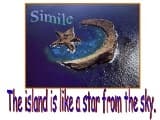
A simile is where two things are directly compared, and “as” or “like” is usually used to compare. |
Personification is giving human traits (qualities, feelings, action, or characteristics) to non-living objects (things, colors, qualities, or ideas). |
Figure of speech where an object’s name is replaced with another name that is closely connected with it. |
|
Formula |
A is B |
A is like B | ||
|
To which group it belongs: - according to I. R. Galperin - according to Kukharenko - according to Screbnev |
Lexical SDs and EMs Lexical SDs Paradigmatic semasiology units |
Lexical SDs and Ems Lexical SDs Paradigmatic semasiology units |
Lexical SDs and Ems Lexical SDs Paradigmatic semasiology units |
Lexical SDs and Ems Lexical SDs Paradigmatic semasiology units |
|
Types |
Semantically it split into: - trite - genuine Structurally: - simple - prolonged - mixed |
Semantically it split into: - trite - genuine Structurally: - ordinary - disguised |
Semantically it split into: - trite - genuine |
- Synecdoche is a figure of speech in which a part is used to represent the whole or the whole for a part. - Antonomasia is the substitution of a title or epithet for a proper name, as in calling a sovereign "Your Majesty.” |
|
Example |
|
|
|
|



http://www.imschools.org/cms/Units/Poetry/personif.htm